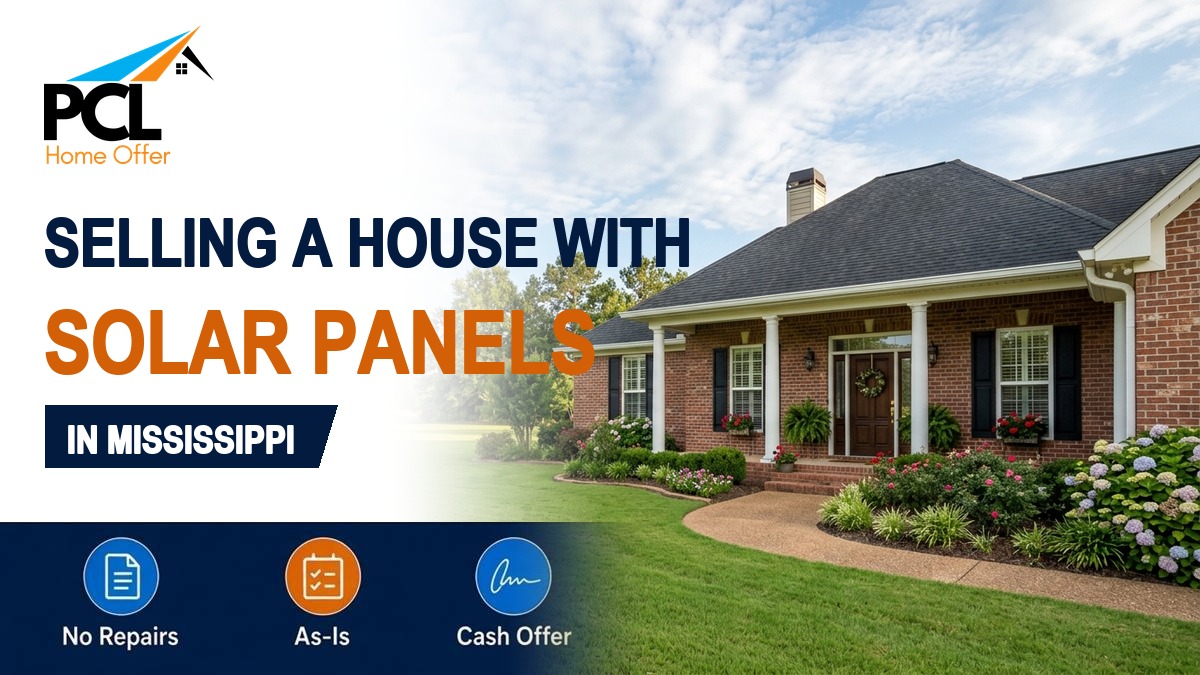
Installing solar panels can help homeowners manage electricity costs, but what happens when it's time to move? If you're planning to sell your house, you may be wondering whether the panels will increase your home's value, whether a buyer must take over your solar payments, or whether you need to remove the equipment before closing.
The good news is that you can sell a house with solar panels. However, the process depends on how the system was purchased and who legally owns it.
A home with fully paid-off solar panels is usually simpler to sell than one with an outstanding solar loan or a long-term lease. Understanding your options before listing can help prevent delays and unexpected expenses.
If you're a homeowner in Mississippi thinking about selling, here's what you should know.
1. Can You Sell a House With Solar Panels?
Yes. Solar panels generally do not prevent you from selling your house.
However, you need to understand the ownership and financing arrangements before putting the property on the market.
Most residential solar systems fall into one of these categories:
- Owned outright: You purchased the system and have no remaining solar loan.
- Financed: You purchased the panels using a solar loan and still have payments remaining.
- Leased: A solar company owns the equipment, and you pay to use it.
- Power Purchase Agreement (PPA): A third-party company owns the system, and you pay for the electricity it produces.
Each arrangement creates different responsibilities when you sell.
The National Association of REALTORS® explains that ownership, financing, and lease agreements can affect how solar equipment is handled during a real estate transaction.
2. What Happens When You Own the Solar Panels Outright?
If you purchased your solar panels without financing or have already paid off the loan, selling the house is generally more straightforward.
The solar system can typically transfer to the new homeowner as part of the property sale, subject to the applicable contract and title requirements.
This may make your home attractive to buyers who want the benefits of solar energy without taking on another monthly payment.
Before listing, gather the following information:
- Solar installation documents.
- Equipment specifications and installation date.
- Manufacturer and workmanship warranties.
- Maintenance and repair records.
- Recent electricity bills.
- Solar energy production reports.
- Utility interconnection or net-metering documents.
Buyers may want to know how much electricity the system produces and whether the equipment is still covered by warranties.
Do solar panels automatically increase your home's value?
Not necessarily. Owned solar panels can contribute to a home's appeal and may add value, but the amount depends on the system's age, condition, energy production, local utility policies, and what buyers are willing to pay.
Don't simply add the original installation cost to your asking price. A qualified appraiser should consider the market's reaction to the system.
3. What If You Still Have a Solar Loan?
Many homeowners purchase solar panels through financing rather than paying the entire cost upfront.
If you still owe money on your solar system, you need to understand how the loan is structured before selling.
There are generally two types of solar loans.
Secured Solar Loan
A secured solar loan may use the solar equipment as collateral. The lender may have recorded a UCC financing statement or fixture filing.
Depending on the agreement and title requirements, you may need to pay off the remaining balance or arrange for the filing to be released or properly subordinated before closing.
Many sellers arrange for the payoff to be handled through the closing process.
Unsecured Solar Loan
An unsecured solar loan is not secured by the home or solar equipment.
In this situation, you may be able to sell the property without paying the entire loan balance at closing. However, the loan remains your personal financial responsibility unless the lender agrees to another arrangement.
The buyer does not automatically become responsible for your personal loan simply because the panels remain on the roof.
Before listing your property:
- Contact your solar lender.
- Request the current loan balance.
- Ask whether the loan can be transferred.
- Find out whether a UCC filing exists.
- Request written payoff and release requirements.
- Share the relevant information with your closing professional.
The Consumer Financial Protection Bureau explains that homeowners with outstanding solar loans typically need to arrange a permitted loan assumption or pay off the remaining balance when selling, particularly when the loan is secured by the panels.
4. What If Your Solar Panels Are Leased?
Selling a house with leased solar panels can require additional coordination.
When you lease a system, the solar company owns the equipment. You are paying for the right to use it under a contract.
That means you cannot automatically sell the panels as if you own them.
You generally have several possible options.
Option 1: Transfer the Lease to the Buyer
Some solar companies allow the next homeowner to take over the existing lease.
The buyer may need to:
- Apply for approval from the solar company.
- Meet the company's credit requirements.
- Review the monthly payment.
- Agree to the remaining contract terms.
- Sign the necessary transfer documents.
This can work well if the buyer understands the agreement and is comfortable with the payment.
Option 2: Buy Out the Lease
Some agreements allow homeowners to purchase the system before selling.
The buyout amount depends on the contract and may be substantial.
Once the purchase is completed and ownership is properly transferred, the panels may be included in the property sale as owned equipment.
Option 3: Prepay the Remaining Lease
Some solar agreements allow you to pay the remaining contractual payments in advance.
However, prepayment does not always mean you become the owner of the panels. Read the agreement carefully and ask the solar company what happens to the equipment after prepayment.
The Mississippi Attorney General's consumer solar guide specifically encourages homeowners to ask about lease transfers, early termination, buyout options, fees, and what happens when the home is sold.
5. What Happens If You Have a Power Purchase Agreement (PPA)?
A Power Purchase Agreement, commonly called a PPA, is different from a traditional solar lease.
With a PPA, a third-party company generally owns the solar equipment and sells the electricity it generates to the homeowner under agreed pricing terms.
When selling your home, the buyer may be able to assume the existing PPA, subject to the provider's approval and contract requirements.
Before agreeing to a transfer, review:
- The price you pay for solar electricity.
- Any annual payment increases.
- The remaining contract period.
- Minimum or guaranteed production terms.
- Transfer requirements.
- Early termination or buyout provisions.
Some buyers may appreciate the opportunity to use solar-generated electricity, while others may not want another long-term contract.
If the buyer doesn't want to assume the agreement, contact the provider to understand whether a buyout or another permitted option is available.
6. Do Solar Panels Increase or Decrease Your Home's Value?
This is one of the biggest questions homeowners ask before selling.
Solar panels may improve a home's appeal, particularly when the system is owned outright, in good condition, and producing meaningful electricity savings.
However, they don't guarantee a higher selling price.
Several factors influence how buyers view a solar-powered home.
System Ownership
Owned systems are generally easier for buyers to evaluate because there is no separate lease payment or third-party ownership agreement to assume.
Age and Condition
Buyers may be less interested in an older system with outdated equipment or expensive maintenance requirements.
Electricity Savings
Recent utility bills and production reports can help buyers understand the actual financial benefits.
Roof Condition
Because solar panels are installed on or near the roof, buyers may want to know how old the roof is and whether repairs or replacement are needed.
Financing Obligations
An outstanding loan or lease can make the transaction more complicated, especially if the buyer must qualify to assume an agreement.
The National Association of REALTORS® recommends reviewing the system's ownership, performance, warranties, roof condition, and local utility policies when evaluating a property with solar panels.
7. Gather Your Solar Documents Before Listing
One of the easiest ways to prevent unnecessary delays is to prepare your paperwork early.
Buyers and their lenders may want documentation explaining how the system works and what financial obligations come with it.
Prepare these documents if available:
| Document | Why it matters |
|---|---|
| Solar purchase or lease agreement | Confirms who owns the equipment |
| Solar loan statement | Shows the outstanding balance |
| UCC or fixture filing information | Helps the title company identify recorded interests |
| Installation records | Confirms system details and installation history |
| Equipment warranties | Explains available coverage |
| Maintenance records | Shows repairs and service history |
| Energy production reports | Helps buyers evaluate performance |
| Utility bills | Provides information about electricity costs |
| Interconnection documents | Shows the system's connection with the utility |
If you cannot find the paperwork, contact the installer, lender, or solar provider before accepting an offer.
8. Check Your Roof, Insurance, and Utility Arrangements
Solar panels are only one part of the transaction. Buyers may also want to understand how the installation affects the rest of the property.
Inspect the Roof
Ask when the roof was last replaced and whether there have been leaks or repairs around the panel installation.
If the roof needs replacement, the panels may need to be removed and reinstalled. This can add to the cost and affect your selling timeline.
Review Homeowners Insurance
Contact your insurance provider to confirm that the solar equipment is covered and whether the system affects your policy or premium.
The Mississippi Attorney General's consumer guide recommends checking insurance coverage for solar equipment and understanding how installation may affect existing roof warranties.
Contact Your Utility Provider
Solar systems may operate under different utility arrangements.
In Mississippi, the utility's interconnection and net-metering rules matter. The Mississippi consumer guide notes that Entergy Mississippi and Mississippi Power customers are subject to the state's net-metering framework, while electric cooperative members should contact their own providers for applicable guidelines.
Don't promise a buyer a particular level of electricity savings or bill credits without checking the applicable utility agreement.
9. Can You Sell a House With Solar Panels As-Is?
Yes, you may be able to sell a house as-is even if it has solar panels.
An as-is sale generally means you are offering the property in its current condition rather than agreeing to complete requested repairs.
However, selling as-is does not remove your obligation to disclose known material issues where required by state law. It also does not eliminate outstanding solar loan, lease, or title requirements.
For example, imagine you own a house in Mississippi with solar panels, but the property also needs roof repairs, interior updates, and general maintenance.
You may not want to invest more money in renovations before moving.
You could consider a direct cash sale, but you should still provide accurate information about the solar system and any outstanding financial agreements.
The buyer and closing professionals will need to determine how the solar equipment and related obligations can legally be handled.
10. Is Selling to a Cash Home Buyer an Option?
If you want to sell your house without spending time on repairs, cleaning, or repeated showings, a direct cash offer may be worth exploring.
Cash home buyers sometimes consider properties with solar panels, including houses that need maintenance or updates.
However, having a cash buyer does not automatically remove a solar loan, lease, PPA, or recorded title issue.
Before accepting an offer, ask:
- Does the buyer understand the solar system's ownership arrangement?
- Will the solar loan need to be paid off at closing?
- Can the lease or PPA be transferred?
- Are there any recorded UCC filings or other title requirements?
- What deductions or closing expenses will apply?
- Is the proposed closing date realistic?
Compare the expected net proceeds rather than focusing only on the offer price.
If your solar agreement is complicated, speak with the provider and closing professional early so you know what needs to happen before the transaction can close.
Frequently Asked Questions
1. Can I sell my house if I still owe money on the solar panels?
Yes. You may be able to sell while a solar loan is outstanding. Depending on whether the loan is secured or unsecured, you may need to pay it off, arrange a permitted assumption, or continue making payments separately after closing.
2. Do I have to remove solar panels before selling my house?
Usually not. Solar panels can generally remain on the property. However, if the system is leased or financed, you must address the ownership agreement, loan, or any applicable title requirements.
3. Can a buyer take over my solar panel payments?
Possibly. Some lenders and solar companies allow a qualified buyer to assume an existing loan, lease, or PPA. Approval depends on the contract and the provider's requirements.
4. Do solar panels make a house harder to sell?
Not necessarily. Owned, well-maintained solar panels with documented energy production can appeal to some buyers. However, complicated lease terms, high monthly payments, or unclear ownership can make the sale more challenging.
5. Can I sell a house with leased solar panels in Mississippi?
Yes, but the lease agreement must be addressed. Depending on the contract, the buyer may be able to assume the lease, or you may need to explore a buyout or prepayment option.
6. Will I get more money for my house because it has solar panels?
Not automatically. The value depends on ownership, system condition, energy production, utility arrangements, and local buyer demand. A qualified appraisal and comparable sales can help establish a realistic price.
7. Can cash home buyers purchase houses with solar panels?
Some cash home buyers may consider properties with solar installations. However, outstanding loans, leases, PPAs, and title requirements still need to be resolved or properly handled before closing.
8. What should I do first if I want to sell my house with solar panels?
Find your original solar agreement and determine whether the panels are owned, financed, or leased. Then contact the solar company or lender for current payoff and transfer information before listing the property.
Final Thoughts: Make a Plan Before Selling Your Solar-Powered Home
Selling a house with solar panels doesn't have to be difficult. The most important step is understanding who owns the system and whether any payments or contractual obligations remain.
If you own the panels outright, the process is usually more straightforward. If you have a solar loan, lease, or PPA, contact the provider early to understand your payoff, transfer, or buyout options.
If you're planning to sell a property in Mississippi and don't want to spend more money on repairs or renovations, PCL Home Offer can help you explore a direct cash-sale option.
Whether your property has solar panels, needs maintenance, or simply isn't the right fit for your next chapter, learn more about your options at PCL Home Offer.